

Religious Activities
- Home
- Activities
- Religious Activities
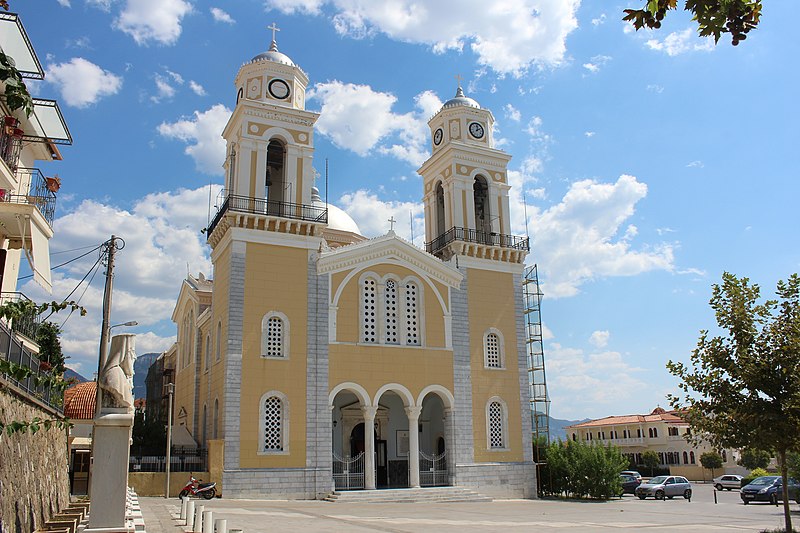
With centuries-old churches, ancient monasteries, and significant Christian festivals that showcase the city’s spiritual legacy, Kalamata is home to a rich religious past. Kalamata provides both locals and tourists with a rich religious experience, whether they explore peaceful monastic retreats, see Orthodox celebrations, or visit chapels from the Byzantine era.
Kalamata offers an insight into Messinia’s spiritual life, from the recognizable Church of Ypapanti, the city’s religious icon, to the serene monasteries hidden in the Taygetos Mountains. In addition to being places of worship, many of these holy locations are also historical and architectural landmarks that provide insight into Kalamata’s past.
Drakopoulosdim – Own Work, CC By-SA 4.0, Image might be subject to copyright, Find Out on Commons Wikimedia
Major Churches & Cathedrals in Kalamata
Church of Ypapanti (Presentation of Christ)

Drakopoulosdim – Own Work, CC By-SA 4.0, Image might be subject to copyright, Find Out on Commons Wikimedia
Why Visit
The most important church in Kalamata is dedicated to the city’s patron saint.
Location
Ipapantis Square, Kalamata, 24100, Greece
Church of Agioi Apostoloi (Holy Apostles)

Maesi64 – Own Work, CC0 By 1.0, Image might be subject to copyright, Find Out on Commons Wikimedia
Why Visit
A Byzantine-era church dating back to the 13th century.
Location
32 Stadiou, Kalamata, 24100, Greece
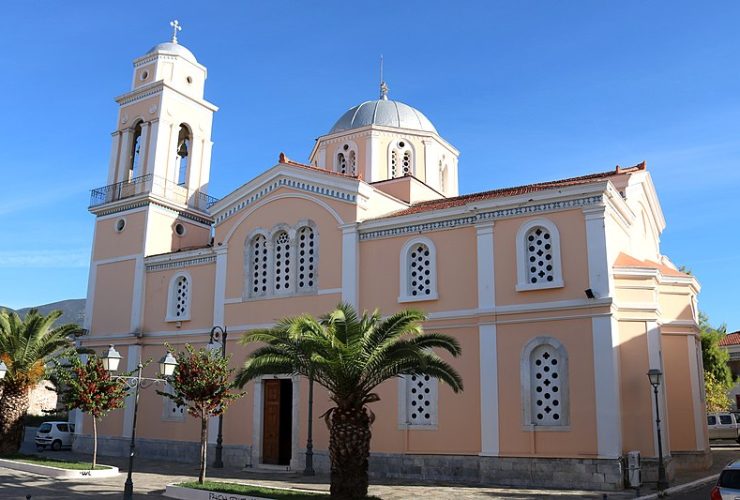
Church of Agios Ioannis (Saint John)
Drakopoulosdim – Own Work, CC By-SA 4.0, Image might be subject to copyright, Find Out on Commons Wikimedia
Why Visit
Known for its peaceful atmosphere and traditional Greek Orthodox design.
Location
Kalamata, 24100, Greece
Religious Festivals & Celebrations in Kalamata
Feast of Ypapanti (February 2)
Kalamata’s most important religious event is the Feast of Ypapanti, which honours the Virgin Mary of Ypapanti, the city’s patron saint. The revered icon of the Virgin Mary thought to possess miraculous abilities, is housed in the imposing Cathedral of Ypapanti, which dominates the old town’s skyline. Since the icon was placed in the cathedral after being found buried in a stable in the early 19th century, the yearly festival has grown in significance for both pilgrims and residents.
The festival’s highlight is a magnificent religious procession in which thousands of believers, priests, choirs, and local dignitaries accompany the holy icon as it is carried through Kalamata’s streets. Along the roads, people congregate to pray for protection and health, light candles, and receive blessings. The mood is solemn yet joyous, with church bells ringing around the city. High-ranking Orthodox clergy, politicians, and tourists from all over Greece attend this festival, a significant manifestation of local identity and faith.
Easter Celebrations (Holy Week & Orthodox Easter Sunday)
In Kalamata, as throughout Greece, Greek Orthodox Easter is the most significant and emotionally charged religious holiday. During Holy Week, the city comes to life with several highly symbolic customs culminating in the spectacular Easter Sunday festivities.
Local churches commemorate the Last Supper with services on Holy Thursday, and many families colour eggs crimson to represent Christ’s blood. One of the most moving traditions takes place on Good Friday when churches host solemn processions of the Epitaphios, a gorgeously decorated bier that symbolizes the body of Christ. The streets of Kalamata are filled with a profoundly spiritual atmosphere as people accompany the procession while holding candles and reciting hymns.
Crowds attend churches throughout the city on Holy Saturday night, anticipating the Resurrection service at midnight. The faithful light their candles from the Holy Flame, which was brought from Jerusalem, and fireworks light up the night sky in a dramatic celebration as the priest proclaims, “Χριστός Αvέστη!” (“Christ is Risen!”). One of Kalamata’s unique Easter traditions is the Saitopolemos (Rocket War), in which residents use homemade tubes to reenact a famous battle. This custom has its roots in the Greek War of Independence.
Easter Sunday brings a joyful conclusion to fasting and reflection as families gather for a grand feast that includes meat, red eggs, and traditional Easter delicacies.
Feast of Agios Apostolos (June 29)
Two of the most essential Christian individuals, Saint Peter and Saint Paul, are honoured on June 29 with the Feast of Agios Apostolos. One of Kalamata’s oldest holy sites, the Church of Agioi Apostoloi, is the event’s focal point. This 13th-century Byzantine church strongly connects to the city’s past because, on March 23, 1821, the Greek Revolution against Ottoman domination was proclaimed here.
A special liturgy and procession are held on the feast day, drawing believers from around the area. Many people come to the church to pray, light candles, and ask the saints for blessings. The festivities continue into the evening after the religious services, featuring local specialties, traditional music, and cultural events in the adjacent square. In addition to being a period of spiritual devotion, the festival honours Kalamata’s cultural pride and historical resilience.
Feast of the Dormition of the Virgin Mary (August 15)
One of Greece’s most important religious events is the Feast of the Dormition of the Virgin Mary, affectionately referred to as “The Summer Easter” in Kalamata. The Orthodox Church celebrates the Virgin Mary’s death (Dormition) and ascension into heaven on August 15. Since the Panagia (Virgin Mary) is regarded as the mother and defender of the country, this event holds great significance for the Greek people.
Major churches like the Church of Ypapanti and the Monastery of Velanidia host special services in Kalamata. During a solemn ceremony and candlelit procession, the faithful assemble to pray, sing hymns, and ask for the Virgin Mary’s blessings. Many families use this time for spiritual retreats at local monasteries, while others use it for celebrations and group feasts.
There is a lot of activity at Kalamata because this feast is also a public holiday in Greece. Spirituality and joyous celebration blend as traditional music, dancing, and cuisine fill the city’s squares, tavernas, and streets. In Greece, the feast represents rebirth, hope, and the close ties between religion and daily life.
Panagiri (Local Religious Festivals)
The term “Panagiri” (παvηγύρι) describes traditional Greek village celebrations of local saints or religious occasions. Rooted in Orthodox Christian traditions, these festivals serve as important social and cultural events that bring locals and tourists together in a joyous setting. They are essential to local life because Kalamata and the nearby villages host several panagiria all year.
Every Panagiri usually starts with a church ceremony followed by a wine and food blessing. After that, celebrations continue with traditional dancing, live Greek folk music, and a feast of regional specialties like lamb, souvlaki, and homemade pies. People of all ages gather in a lively and inviting atmosphere as the events frequently continue into the early morning hours.
Some of the most notable Panagiria in Kalamata and Messinia include:
Panagiri of Agios Floros (August 17)
A well-known festival in a nearby village, featuring music, food, and dancing in a scenic setting.
Panagiri of Prophet Elias (July 20)
Celebrated at churches dedicated to Prophet Elias, often in mountainous regions with breathtaking views.
Panagiri of Agios Dimitrios (October 26)
Held in various villages around Kalamata, marking the feast day of Saint Demetrius, a patron of soldiers and protector against invasions.
Going to a Panagiri is an excellent way for tourists to get a firsthand look at Greek hospitality, traditions and religious commitment. These festivals are among the most memorable events in Kalamata because of the blend of music, faith, and community spirit.
Pilgrimage Routes & Religious Tourism
Walking the Byzantine Church Route
A self-guided walking tour of Byzantine churches in Kalamata, including Church of Agioi Apostoloi, Church of Agios Ioannis and Church of Agios Nikolaos Flarios. It’s a great way to experience Kalamata’s religious history on foot.
Visiting Monastic Retreats in Taygetos
The monasteries in the Taygetos region provide opportunities for spiritual retreats and quiet reflection. Some monasteries offer guest accommodations for pilgrims seeking an immersive religious experience.